


Blog
Chain Lubricant Spray: Why the Grease Formula Makes a Difference

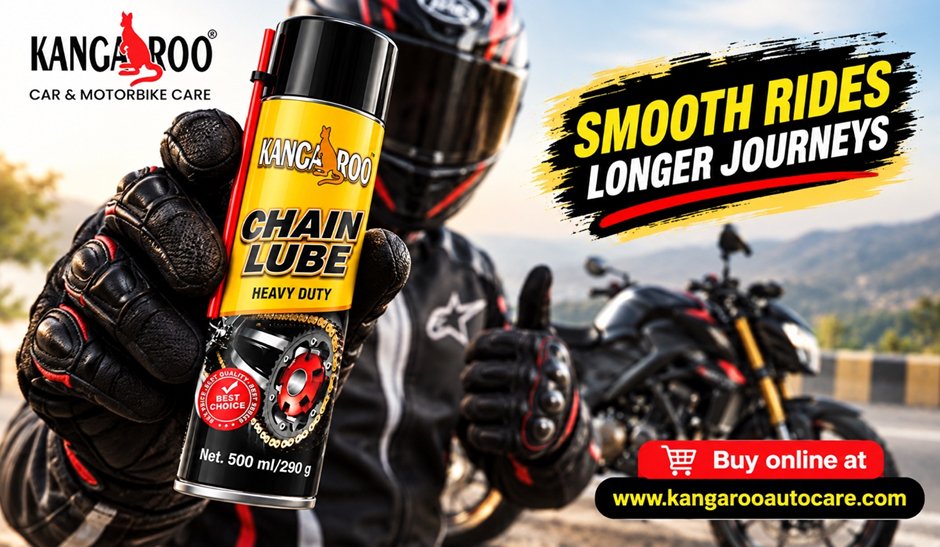
Spray a thin, watery lubricant on a chain and it often flings straight back off within a few kilometres, leaving the chain dry again just when it needs protection most. A chain lubricant spray built on a grease-based formula solves that specific problem — it clings to the chain instead of spraying off, which changes how well it actually protects over distance, weather, and time.
Kangaroo’s chain lubricant spray uses exactly this kind of grease-based formula. This blog looks at what makes it different from a standard liquid lube, where it’s used, and how to apply it for the best results.
What Makes This a Grease-Based Chain Lubricant Spray
The grease formulation changes several things about how the product performs compared to a thinner, oil-based spray:
- Eliminates fling-off, sealing the lubricant to the chain instead of spraying loose at speed
- Excellent rust protection, forming a more persistent barrier than a thin liquid film
- Suitable for all chain types, including standard motorcycle drive chains
- Light amber color and thicker consistency, visibly different from a clear, watery lubricant
- Built for extreme pressure, designed to hold up under the load a motorcycle drivetrain puts on a chain
- Strong penetrative qualities, reaching into the chain’s links and pins despite the thicker formula
Together, these qualities are what separate a grease-based chain lubricant from a lighter, faster-drying spray.
Where Chain Lubricant Spray Is Used
This kind of formula tends to suit certain riding conditions and chain types better than others:
- Motorcycles ridden regularly at higher speeds, where fling-off is more of a problem for thinner lubricants
- Daily commuting, where consistent protection matters more than quick-drying convenience
- Dusty or dry riding conditions, where a thicker film holds up better between applications
- General maintenance of chain-driven machinery, beyond just motorcycles, wherever a durable protective layer is useful
Grease vs Standard Liquid Chain Lube: When Each Makes Sense
Neither formula is universally better — it depends on how and where you ride:
- Grease-based lubricant holds up longer under high speed and pressure, resists fling-off, and offers stronger rust protection, making it a good fit for regular riders and tougher conditions
- Standard liquid lube tends to dry faster and attract less dust in the short term, which some riders prefer for lighter, more occasional use
- Reapplication frequency is generally lower with a grease-based formula, since it stays on the chain longer between applications
- Cleanup can take slightly more effort with a thicker grease formula compared to a lighter liquid spray
For riders who lubricate their chain often and want it to last between applications, the grease formula is usually the more practical choice.
How to Apply Chain Lubricant Spray for Best Results
Getting the application right makes a real difference to how well any chain lubricant performs:
- Clean the chain first, since grease applied over existing dirt traps grime rather than protecting the chain
- Apply while slowly rotating the wheel, so the spray reaches evenly around the entire chain
- Focus on the inner side of the chain, where the rollers and pins actually need lubrication
- Let it settle for a few minutes before wiping away excess from the outer surface
- Reapply based on riding conditions, more frequently in wet or dusty environments than in dry, low-mileage use
Signs Your Chain Needs Lubrication
A few warning signs usually show up before a chain gets bad enough to cause real damage:
- A dry, dull appearance instead of a light, even sheen along the chain
- Audible squeaking or grinding, especially noticeable at low speed
- Visible surface rust, even light discoloration, which signals the existing protective layer has worn off
- Stiff links that don’t flex smoothly when you rotate the wheel by hand
Catching these signs early and reapplying lubricant promptly is far cheaper than replacing a chain that’s been run dry for too long.
FAQs About Chain Lubricant Spray
- What’s the difference between a chain lube spray and a chain lube grease spray?
A grease-based spray is thicker and designed to cling to the chain and resist fling-off, while a standard lube spray is thinner and dries faster but may need more frequent reapplication. - Does grease-based chain lubricant attract more dirt than liquid lube?
It can attract slightly more dust on the surface due to its thicker consistency, though this is usually outweighed by its longer-lasting protection and reduced fling-off. - Is this chain lubricant spray safe for O-ring chains?
It’s suitable for all chain types, but it’s worth confirming compatibility with your specific chain’s manufacturer guidelines before regular use. - Why does the spray have a light amber color?
The amber tint comes from the grease-based formulation itself and helps make it visible on the chain during and after application, unlike a clear liquid lube. - How long does the protective coating last before reapplication?
This varies with riding conditions, but the grease formula generally lasts longer between applications than a thinner liquid lubricant, especially in dry conditions. - Can this be used on both motorcycle and bicycle chains?
Yes, though bicycle chains are lighter-duty, so some riders prefer a lighter lubricant for bicycles and reserve the grease formula for motorcycles. - Is the product flammable, and how should it be stored?
Yes, like most aerosol lubricants, it’s flammable and should be kept away from open flame and stored in a cool, dry place out of direct sunlight.
Conclusion
The formula behind a chain lubricant spray matters as much as the act of applying it — a grease-based spray trades a little extra cleanup effort for stronger fling resistance and longer-lasting protection. Kangaroo’s chain lubricant spray is built around that trade-off for riders who want their chain protected for the long haul between applications, rather than reapplying after every long ride. Explore the full range to find the right formula for how you ride.