

Chain Lubricant Spray: The Small Ritual behind Every Smooth, Silent Ride

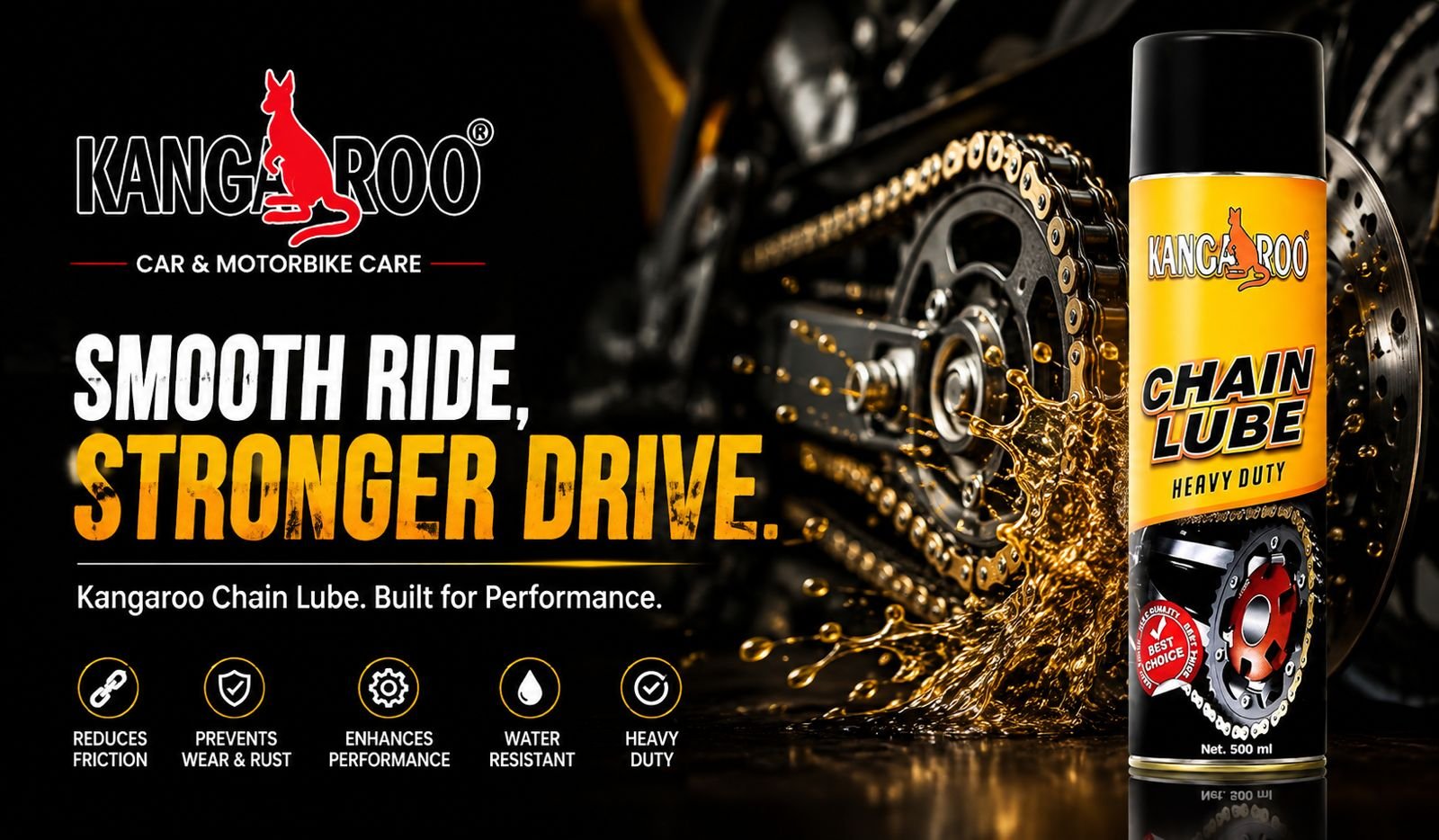
There’s a sound every rider eventually learns to dread. It starts as a faint clicking somewhere near the rear sprocket, grows into a dry, metallic grind by the time you hit third gear, and by the weekend it’s loud enough that people at the traffic light turn to look. That sound is a motorcycle chain crying out for help — and it’s almost always fixed by the one bottle every rider’s toolbox should have: a good chain lubricant spray.
It’s easy to overlook. The chain lives low and out of sight, tucked between the sprockets, catching every bit of road grime, monsoon spray, and dust the ride throws at it. Yet it’s also one of the hardest-working parts of the bike, transferring every bit of engine power to the rear wheel, thousands of times a minute. Neglect it, and you don’t just get noise — you get sluggish acceleration, rust, premature wear, and eventually a chain replacement that costs far more than the spray that would have prevented it.
This guide walks through why chain lubrication matters, what actually happens to a dry chain, and how to build a five-minute habit that keeps every ride smoother for thousands of extra kilometres.
Why a Dry Chain Costs You More Than You Think
A motorcycle chain is made up of dozens of tiny moving parts — pins, bushes, rollers, and plates — all working under constant tension. Every one of those contact points needs a thin film of lubrication to move against each other smoothly. Without it:
- Friction climbs, forcing the engine to work harder just to turn the rear wheel
- Dust and grit stick to bare metal, turning into a fine grinding paste with every rotation
- Moisture from rain, humidity, or a wash creates ideal conditions for rust to take hold
- Wear speeds up, stretching the chain until it starts skipping on the sprocket teeth
None of this happens overnight — it creeps in as a little more noise each week, a little more play in the chain, a little more resistance when you push the bike. By the time it’s obvious, the damage is already done. That’s exactly why a chain lubricant spray isn’t really a fix; it’s prevention, applied on a schedule.
What a Good Chain Lubricant Spray Actually Does
At its core, a chain lubricant spray is built to do three jobs at once:
- Penetrate deep into the rollers, pins, and bushings — the internal contact points that a thick grease could never reach
- Coat the chain in a thin, protective film that cuts down metal-on-metal friction
- Resist water, dust, and road grime so the protection doesn’t wash away after the first rainy commute
A well-formulated spray also dries down rather than staying tacky, which matters more than it sounds. A sticky chain attracts dust like a magnet, and that dust is exactly what turns into the grinding paste mentioned above. A quick-drying formula lets the lubricant sink into the metal without leaving a residue that just collects more dirt.
Get it right, and the payoff is a chain that runs quieter, transfers power more efficiently, resists rust through a full monsoon season, and simply lasts longer before it needs replacing.
Choosing the Right Chain Lubricant Spray
Not every lubricant on the shelf is built the same way, and the right pick usually comes down to how you ride:
– Daily city commuters — short hops, stop-and-go traffic, occasional dust — are usually well served by a compact bottle kept at home for a monthly top-up. A 150ml chain lubricant spray is easy to store and more than enough for regular touch-ups without product going to waste.
– Long-distance and touring riders — highway stretches, changing weather, more kilometres between services — get more value from a larger 500ml bottle, ideally one bundled with a cleaning brush. Covering serious distance means cleaning the chain thoroughly before every lubrication, and having the brush built into the kit removes any excuse to skip that step.
– Riders who want a complete routine— not just lubrication, but rust prevention and a shine finish too — are better off with combo kits that pair a chain lubricant spray with a chain cleaner and a metal or chrome polish. It turns a five-minute chore into a full bike-care ritual, usually for less than buying each product on its own.
Kangaroo Autocare, an Indian manufacturer built around everyday motorcycle upkeep, offers its chain lubricant spray across each of these formats — from standalone 150ml and 500ml bottles to cleaner-and-brush combo kits — so the choice really just comes down to how often you ride and how hands-on you want your maintenance routine to be.
How to Apply Chain Lubricant Spray the Right Way
Good lubrication is as much about technique as it is about the product. Here’s a routine that takes less time than a fuel stop:
- Clean before you spray. Wipe the chain down with a rag, or better, a dedicated cleaning brush, to knock off loose dust and old, gummed-up lubricant. Spraying fresh product over old grime just seals the dirt in.
- Warm the chain slightly, if you can. A chain that’s just come off a short ride is a touch warmer and more receptive to the spray reaching into the rollers and pins.
- Spray along the inner edge, aiming at the point where the rollers meet the sprocket. That’s where the lubricant needs to reach — coating only the flat outer face mostly just looks the part.
- Rotate the wheel as you go so the entire loop of chain gets an even coat.
- Let it sit for a few minutes, then wipe away the excess with a clean cloth. This is what keeps lubricant from flinging onto your wheel, swingarm, or the rider behind you.
- Reapply roughly every 300–500 km, or sooner after riding through rain or a dusty stretch — moisture and grit strip away protection faster than everyday use does.
Stick to this and the chain stays quiet, resists rust, and lasts longer — maintenance that pays for itself many times over in sprocket and chain replacements you never have to make.
Frequently Asked Questions
- How often should I use a chain lubricant spray?
As a general rule, every 300–500 km, or immediately after riding in rain or dusty conditions, since moisture and grit wear away the protective film faster than normal riding does.
-
Does chain lubricant spray work on all motorcycles?
Yes. A quality chain lubricant spray is formulated for chain-driven machines in general, which covers most motorcycles, bicycles, and similar equipment, regardless of engine size or chain type.
-
Do I need to clean the chain before applying lubricant?
Always. Spraying lubricant over an already dirty chain just traps the grit against the metal, so a quick wipe-down or brush-clean first makes the lubrication far more effective.
-
What size chain lubricant spray should I buy?
Occasional or city riders usually do fine with a 150ml bottle for periodic top-ups, while frequent or long-distance riders get more mileage out of a 500ml bottle, often paired with a cleaning brush.